Pop Drama
- 4.5
- Rating
- 10.00M
- Installs
- Free
- Price

 Analysis by App-foxy
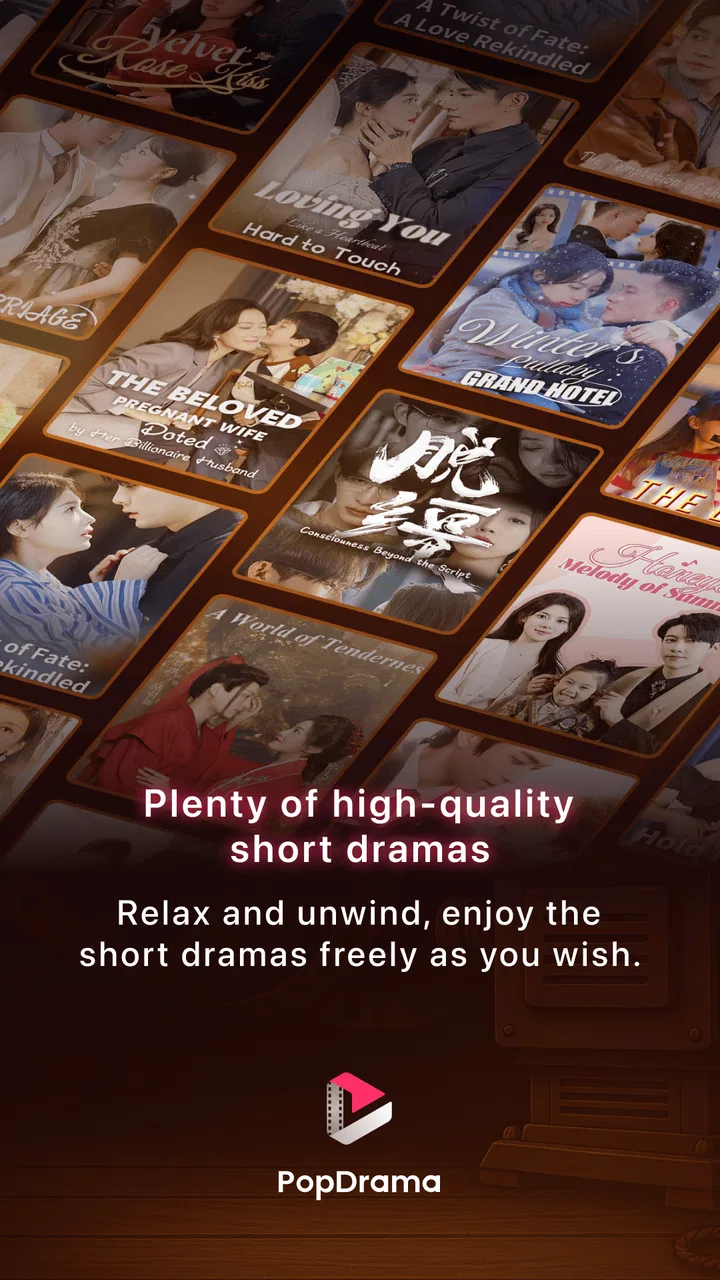
I tried Pop Drama as a way to fit short-form storytelling into small gaps in the day, and my first impression was clear: this is aimed at people who want quick dramatic episodes rather than a traditional, hour-long viewing session. It belongs to the entertainment category, comes from Aura Stream, and is free to install, which makes it easy to test without committing money at the start. The important question is not whether it can replace every streaming service. It cannot. The better question is whether its short-drama format matches the way you actually watch.
That distinction matters because short episodes change the entire viewing habit. I can open the app while waiting for a meal, watch part of a story during a commute, or finish a tense sequence before going to sleep without starting a full movie. At the same time, the compact format can feel demanding when a story moves quickly and expects me to remember characters, conflicts, and cliffhangers from one brief segment to the next. My recommendation depends less on the size of the library and more on your tolerance for serialized viewing, interruptions, and the possibility of optional purchases.
How I would decide whether Pop Drama fits
My first decision criterion would be viewing time. If you usually have twenty minutes and want a complete film, a conventional streaming platform remains a better match. Pop Drama is more interesting when your available time arrives in fragments. It is built for short drama lovers, so its strongest use case is not a planned cinema-style evening but repeated, lightweight visits throughout the day.
You May Also Like

 Blood Strike: 2.5 Anniversary
Blood Strike’s Loadouts Turn Every Drop Into a Tactical Gamble
A close look at Blood Strike’s custom loadouts: how fast access to signature weapons reshapes its battle royale rhythm, rewards preparation, and narrows the gap between fights.

 Pandora - Music & Podcasts
Pandora’s Music Is Easy to Start, but Harder to Recover
Pandora’s strength is its low-effort path from a seed to a station. Its weak spot is how much confidence it asks you to place in connection, setup, and quiet recovery.

 8 Ball Pool
 Is Built on Rivalries, Rematches, and Routine
A close look at the rivalries, rematches, shared routines, and unanswered safety questions that turn a quick pool match into a persistent mobile community.

 Samsung Music
’s Quiet Strength Is Playing What You Already Own
Its reach comes less from spectacle than from dependable access to a personal library. That simplicity is both the app’s strongest retention engine and its ceiling.

 AccuWeather: Weather Radar
AccuWeather Review: A Quick, Clear Forecast for Everyday Decisions
For everyday plans, the best forecast is the one you can understand quickly. AccuWeather makes rain timing, radar, and local conditions easy to act on, with a few trade-offs.

 Hill Climb Racing
Why Hill Climb Racing Still Turns Crashes Into One More Run
A tiny car, a bumpy hill and one more upgrade: Hill Climb Racing keeps resurfacing because its simple chaos makes every near-miss feel personal.
More From Our News Desk



I would also ask how much attention you want to give a story. Short drama is convenient, but convenience does not always mean simplicity. A brief episode can end just as the conflict becomes interesting, encouraging you to continue immediately. That rhythm works well when I want momentum. It works less well when I am trying to relax without feeling pulled through a chain of unresolved scenes.
The app is free, but in-app purchases range from ninety-nine cents to fifteen dollars and ninety-nine cents per item. I would treat that as a reason to decide on a personal spending limit before getting absorbed in a series. Free entry is useful for sampling the experience, but it does not automatically mean every part of the viewing journey will remain cost-free.
Age suitability is another practical consideration. The content rating is Teen, so I would not choose it as an unsupervised entertainment option for young children. Parents should look at the app with the intended audience in mind, especially if a child is borrowing a phone or tablet. The rating gives a useful boundary, but it is still sensible to make the final decision based on the individual viewer.
Device compatibility is relatively broad: the app supports Android 7.0 and newer. That makes it approachable for people who do not own a recent phone, although the age of a device can still affect comfort, storage, battery life, and general responsiveness. I would install it on the device where I actually plan to watch rather than assuming that an older handset will deliver the same experience as a newer one.
One useful way to test it is to create a small viewing routine instead of judging it after a single opening scene. Try one episode when you have a short break, then return later and see whether the story is easy to pick up again. This reveals something a store summary cannot: whether the app suits your memory, patience, and daily schedule. For me, that is a better test than simply asking whether the premise sounds appealing.
What makes the short-drama format useful
The biggest practical advantage is immediacy. I do not need to reserve a long block of time before opening the app. That makes it a natural companion for waiting rooms, public transport, lunch breaks, or the few minutes before an appointment. I would not use those moments for a complex film because I might have to stop halfway through. Short drama makes the interruption feel less disruptive.
There is also a psychological advantage to a compact episode structure. Starting a long series can feel like a project, while a short drama is easier to approach casually. I can sample a story without promising myself that I will spend the entire evening with it. If the opening does not hold my attention, moving on feels less wasteful than abandoning a long movie after half an hour.
Another strength is the sense of forward movement. Short episodes often place emphasis on immediate conflict, reveals, and turning points. That can make the experience feel energetic even when I only watch for a few minutes. The trade-off is that I may want a slower build, richer side characters, or more room for atmosphere than this format naturally allows.
For a busy viewer, I would use Pop Drama as a secondary entertainment app rather than as the only place to watch. That approach removes pressure. I can keep a longer series on a conventional service for evenings and use this app when my schedule is broken into smaller pieces. The two formats serve different moods instead of competing directly.
Small habits that improve the experience
I found that the best workflow is to choose one drama for a focused trial rather than opening the app with no plan. Short-form catalogs can encourage quick browsing, but constant switching makes it difficult to discover whether a story has a satisfying rhythm. I would give one title enough attention to reach a meaningful turning point, then decide whether its pacing works for me.
It is also worth watching the purchase prompts before tapping automatically. Because individual in-app items can cost money, I would pause whenever the app presents a choice connected to continued viewing. The practical tip is simple: treat every purchase screen as a decision point, not as part of the episode controls. This is especially important when watching late at night or handing the device to someone else.
A second useful habit is to avoid starting a new drama immediately before a situation where you must leave. The format is designed to create momentum, and a cliffhanger can make a short break feel unexpectedly unfinished. If I know I have only a couple of minutes, I prefer to browse or revisit a familiar point instead of beginning a new storyline.
I would also keep the app in a deliberate place on my device. That sounds minor, but it changes whether the service becomes a convenient break or an automatic distraction. For readers who want entertainment without losing an entire evening, setting a viewing window is more effective than relying on willpower after every episode.
Where Pop Drama wins, and where another option may fit better
Pop Drama wins when convenience means short, focused drama rather than a large general-purpose catalog. Its identity is clearer than that of an app trying to cover films, live programming, documentaries, and every other entertainment format at once. If I specifically want dramatic stories that can be consumed in brief sessions, a dedicated short-drama app feels more direct.
It is also a sensible first experiment for someone who has never tried this style of viewing. The free price lowers the barrier to entry, and the app has reached over ten million installs with a 4.8 average from around sixty-five thousand ratings. Those figures do not guarantee that every story will suit me, but they do suggest that the format has found a substantial audience.
The developer, Aura Stream, has positioned the product around this focused viewing idea rather than presenting it as a general replacement for television. I appreciate that narrower purpose because it helps set expectations. I would open it when I want a quick dramatic hook, not when I need a complete library for a family with several different tastes.
Traditional streaming services may fit better for viewers who value long episodes, established film catalogs, or a slower narrative pace. They are also usually the more natural choice for a planned group viewing session. If everyone wants to watch one complete feature together, a short-drama app may leave the room feeling fragmented by frequent episode endings.
Social video platforms may be better for people who prefer spontaneous clips, comedy, commentary, or creator-led material. Pop Drama makes more sense when I want a continuing fictional storyline. The difference is not simply episode length; it is the reason for opening the app. One is built around following a narrative, while the other may be better for browsing whatever catches attention.
Free video services can be preferable when avoiding any possibility of in-app spending is a priority. Pop Drama costs nothing to download, but the presence of optional purchases means I would not describe it as a completely frictionless free viewing environment. Someone who wants a strict no-purchase setup should compare that point carefully before making it their main entertainment app.
Readers who dislike cliffhangers should think twice. Short drama often depends on the promise of what happens next, and that can be exciting or irritating depending on your personality. I enjoy the forward pull when I have time to continue, but I would choose a self-contained comedy or a complete film when I want a clean ending before putting my phone away.
The same applies to viewers who need extensive control over what they watch. A specialist short-drama app may feel focused, but focus can also mean fewer reasons to open it when your mood changes. If you move constantly between sports, news, animation, reality shows, and movies, a broader service will probably reduce the need to switch apps.
Everyday scenarios where the choice becomes clearer
Imagine a commuter with a twenty-minute train ride and an unreliable schedule. Pop Drama can work well because the viewer can watch in compact intervals and stop when the journey ends. I would still avoid beginning an episode if the next station is only a minute away, but the general format is better suited to that fragmented routine than a two-hour film.
Now consider a couple planning a Friday-night watch. If they want shared immersion and a complete story, I would recommend a conventional movie or a longer-form service instead. If both people already enjoy serialized short drama and like discussing each twist between episodes, Pop Drama could become part of the evening, but it would be a different kind of shared activity.
For a student taking a break between assignments, the app may be useful because it offers a defined entertainment task. The danger is that a dramatic ending can turn a planned short break into several consecutive sessions. I would use a timer or decide in advance how many episodes fit the break. That is not a criticism unique to this app; it is a realistic consequence of a format designed to keep the story moving.
For an older phone, the minimum operating-system requirement is encouraging, but I would pay attention to how comfortable the device feels during actual viewing. A compatible operating system only answers whether installation is possible. It does not guarantee that the screen, battery, storage, or network experience will be ideal. If the phone is already struggling with other entertainment apps, I would not expect this one to solve that underlying problem.
What switching to it really involves
The cost of switching is not only financial. It is also the effort of learning a new viewing rhythm and deciding whether the available dramas justify another app on the home screen. Since the app is free to install, the initial commitment is low. The more important commitment is attention: once a story catches me, I may return repeatedly to keep up with it.
I would make the switch gradually. Keep your usual service for long-form viewing, then use Pop Drama during short breaks for several days. This side-by-side test makes the difference obvious. If I consistently reach for it when I have limited time, it has earned a place in my routine. If I only open it because I feel bored for a few seconds, a general video app may be more suitable.
Purchases deserve a separate boundary. I would decide whether I am comfortable paying for individual items before starting a series, and I would avoid treating a low-cost first purchase as proof that later spending will remain insignificant. The listed range, from ninety-nine cents to fifteen dollars and ninety-nine cents per item, is wide enough that casual tapping can become a meaningful expense.
The current version is 1.8.0, and the app was released on May 13, 2025. Those details matter mainly when deciding how established the experience may feel on your device and whether you are comfortable trying a relatively recent entertainment product. I would keep the app updated through the normal store process, particularly if playback or navigation changes over time.
There is no need to abandon every other service. In my view, Pop Drama works best as a complementary tool: short drama for small gaps, longer streaming for deliberate viewing, and other video platforms for browsing or creator content. That combination is more realistic than asking one app to satisfy every entertainment need.
My recommendation for different viewers
I recommend Pop Drama to people who enjoy serialized drama, have irregular pockets of free time, and are comfortable making careful decisions around optional purchases. It is especially appealing if you often think, “I have ten minutes, but not enough time for a movie.” The focused format gives those minutes a clear use without requiring a full evening.
I would recommend it less strongly to families looking for universal entertainment, viewers who want complete stories in one sitting, and anyone who finds cliffhangers stressful rather than enjoyable. I would also point cautious spenders toward a strict personal budget before they begin. Free installation is a good invitation to test the app, not a reason to ignore the purchase model.
My final advice is to judge it by your routine, not by the headline numbers or the promise of convenience. Install it, sample one drama during a genuinely short break, and notice whether the pacing feels satisfying or manipulative. If the format helps you enjoy fiction in moments that would otherwise disappear, it is a worthwhile addition. If you want a broad catalog, uninterrupted long-form viewing, or a guaranteed no-purchase experience, another category of entertainment app will serve you better.
After using it with that distinction in mind, I see Pop Drama as a focused companion rather than a universal streaming replacement. Its best quality is the way it turns scattered time into a continuing story. Its main weakness is the same design: the quick episodes can encourage repeated viewing and make spending decisions feel more immediate. For the right viewer, that balance is manageable, and the smartest way to use it is to set both a viewing limit and a purchase limit before the drama takes over.
FAQs for Pop Drama
01What is Pop Drama, and how does it work?
Pop Drama is an interactive storytelling app that lets users dive into captivating drama series. The app offers a variety of genres, allowing users to influence the storyline through choices. Each decision impacts character relationships and plot outcomes, providing a personalized and immersive experience.
02Is Pop Drama free to use, or does it have in-app purchases?
Pop Drama is free to download and offers several free episodes to get started. However, the app contains in-app purchases for unlocking additional episodes, premium storylines, and exclusive content. Users can choose to purchase these individually or through a subscription model for unlimited access.
03What types of stories are available on Pop Drama?
Pop Drama features a diverse range of stories, including romance, mystery, fantasy, and thriller genres. Each story is crafted by professional writers and includes multiple episodes with branching paths. New stories are regularly added to keep the content fresh and engaging for all users.
04Can I play Pop Drama offline, or do I need an internet connection?
While Pop Drama requires an internet connection for downloading new episodes and content updates, users can enjoy previously downloaded episodes offline. This feature is convenient for traveling or when access to a stable internet connection is limited.
05How does Pop Drama ensure a safe environment for users?
Pop Drama prioritizes user safety by implementing strict content guidelines and age-appropriate ratings. The app features parental controls and community guidelines to ensure a positive experience. Additionally, users can report any inappropriate content directly through the app for review.
Pros
- User-friendly interface for easy navigation.
- Offers a vast library of popular shows.
- High-quality video streaming available.
- Regular updates with new content.
- Supports offline viewing for convenience.
Cons
- Occasional buffering issues reported.
- Limited free content without subscription.
- Ads can be intrusive in free version.
- No parental controls for family use.
- Subscription can be pricey for some.

Pop Drama
Gallery